E-commerceApril 29, 2026
Leveraging Augmented Reality in E-Commerce: Transformative SEO Strategies
Discover how integrating augmented reality into your e-commerce platform can enhance user experience and boost SEO performance, ushering in a new era of online shopping.

Understanding the Basics of Augmented Reality in E-Commerce
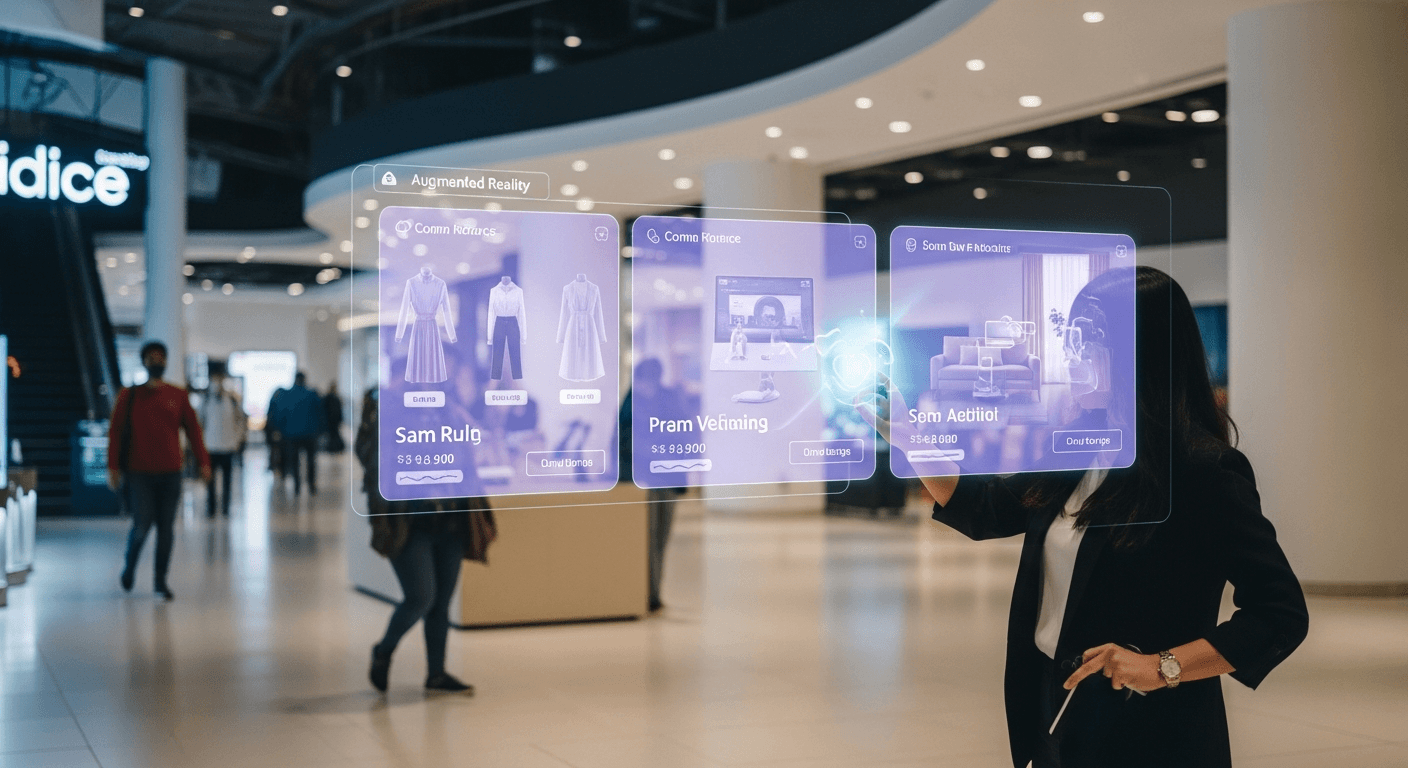
Augmented Reality (AR) is revolutionizing the e-commerce landscape by overlaying digital information on physical objects, enhancing the shopping experience. In e-commerce, AR allows customers to visualize products in their real-world environment before making a purchase. This technology bridges the gap between online shopping and physical retail by offering interactive and immersive experiences.
AR technology is being utilized in various forms, from virtual try-ons in the fashion industry to interactive user manuals in electronics. The core idea is to provide an enriched user experience that can lead to higher engagement and conversion rates. As AR becomes more accessible through smartphones and tablets, its integration into e-commerce platforms is becoming a critical differentiator for brands.
Implementing AR in e-commerce involves using 3D modeling, computer vision, and real-time data processing. These components work together to create a seamless experience where users can see how a product fits into their lives. This technology requires significant investment in both development and hardware but offers substantial returns in terms of customer satisfaction and sales.

Impact of Augmented Reality on Consumer Engagement
AR significantly boosts consumer engagement by providing an interactive shopping experience. Customers are more likely to engage with products that they can visualize in their own space. This interactive element can lead to longer browsing times and a deeper connection with the product, ultimately increasing the likelihood of purchase.
The use of AR can reduce the uncertainty that often accompanies online shopping. By allowing customers to try before they buy, AR reduces return rates and increases customer satisfaction. Users can see how a product fits their style or space, making them more confident in their purchasing decisions.
- Increased time spent on site
- Higher conversion rates
- Reduced return rates
Furthermore, AR provides a novel way to engage younger, tech-savvy consumers who are looking for innovative shopping experiences. By leveraging AR, brands can capture this demographic's attention and foster brand loyalty through cutting-edge technology.
SEO Benefits of Implementing Augmented Reality
Augmented Reality not only enhances the user experience but also offers significant SEO benefits. Search engines favor websites that provide rich, engaging content and user-friendly experiences. AR can improve site metrics such as dwell time, bounce rate, and conversion rate, all of which are key factors in search engine rankings.
By integrating AR, e-commerce sites can gain a competitive edge in search visibility. Enhanced user interaction leads to more user-generated content, such as reviews and social media sharing, which further boosts SEO efforts. Additionally, AR features increase the likelihood of earning backlinks from authoritative sources, as innovative technology often attracts media attention.
Implementing AR can lead to improved search engine rankings by enhancing user engagement and site metrics.
Moreover, AR experiences can be optimized with relevant keywords and metadata to ensure they are indexed by search engines. This can include optimizing product descriptions in AR applications and ensuring that AR content is mobile-friendly, which is crucial given the rise of mobile commerce.
Case Studies: Brands Succeeding with AR in E-Commerce
Several brands have successfully integrated AR into their e-commerce platforms, setting benchmarks for the industry. For instance, IKEA's Place app allows customers to visualize furniture in their own homes using AR, which has significantly enhanced the shopping experience and increased sales.
Similarly, Sephora's Virtual Artist tool enables users to try on makeup virtually. This AR application has not only improved customer engagement but also decreased return rates due to more informed purchase decisions. These case studies demonstrate the potential of AR to transform e-commerce.
- IKEA Place app
- Sephora Virtual Artist
- Nike Fit for shoe sizing
Nike has also leveraged AR with its Nike Fit technology, which scans customers' feet to recommend the best shoe size. This innovation has improved customer satisfaction and reduced the rate of returns, showcasing the practical benefits of AR in enhancing customer experiences.
Future Trends: The Evolution of AR in Online Shopping
The future of AR in e-commerce is promising, with continuous advancements in technology and increased consumer demand for interactive shopping experiences. As AR becomes more mainstream, expect to see more personalized and sophisticated AR applications that cater to individual consumer preferences.
Artificial Intelligence (AI) and Machine Learning (ML) will play a crucial role in the evolution of AR, offering even more tailored and predictive shopping experiences. The integration of AI with AR will enable platforms to offer real-time recommendations and customizations based on user data and behavior.
Staying ahead in e-commerce will require embracing AR and leveraging AI for personalized customer interactions.
Moreover, as AR technology becomes more sophisticated, it will likely become a standard feature in e-commerce websites. Companies that adapt quickly will benefit from enhanced customer loyalty and increased market share, while those that delay may struggle to keep up with consumer expectations.