SEOMay 3, 2026
Harnessing Zero-Click Searches: SEO Strategies for Maximizing Visibility
Explore innovative SEO strategies to capitalize on zero-click searches, ensuring your content remains visible and engaging in the evolving digital landscape.
Understanding Zero-Click Searches: A New SEO Challenge
Zero-click searches are reshaping the landscape of search engine optimization (SEO). These are searches where the answer is displayed directly on the search engine results page (SERP), eliminating the need for users to click through to a website. This phenomenon is largely driven by Google's efforts to enhance user experience by providing quick answers to queries through features like featured snippets, knowledge panels, and instant answers.
The rise of zero-click searches presents a challenge for businesses that rely on organic traffic, as traditional performance metrics like click-through rates (CTR) can be negatively affected. However, there's a silver lining; these searches can significantly boost brand visibility and authority, if leveraged correctly. Companies must adapt their SEO strategies to maintain and grow their online presence by focusing on how to feature their content prominently on the SERP.
To effectively capitalize on zero-click searches, businesses need to understand user intent deeply. This involves analyzing the types of queries that result in zero-click searches and tailoring content to address these queries directly. By doing so, companies can position themselves as authoritative sources of information, increasing the likelihood that their content will appear in featured snippets and other SERP features.

Adapting Content for Featured Snippets and Rich Results
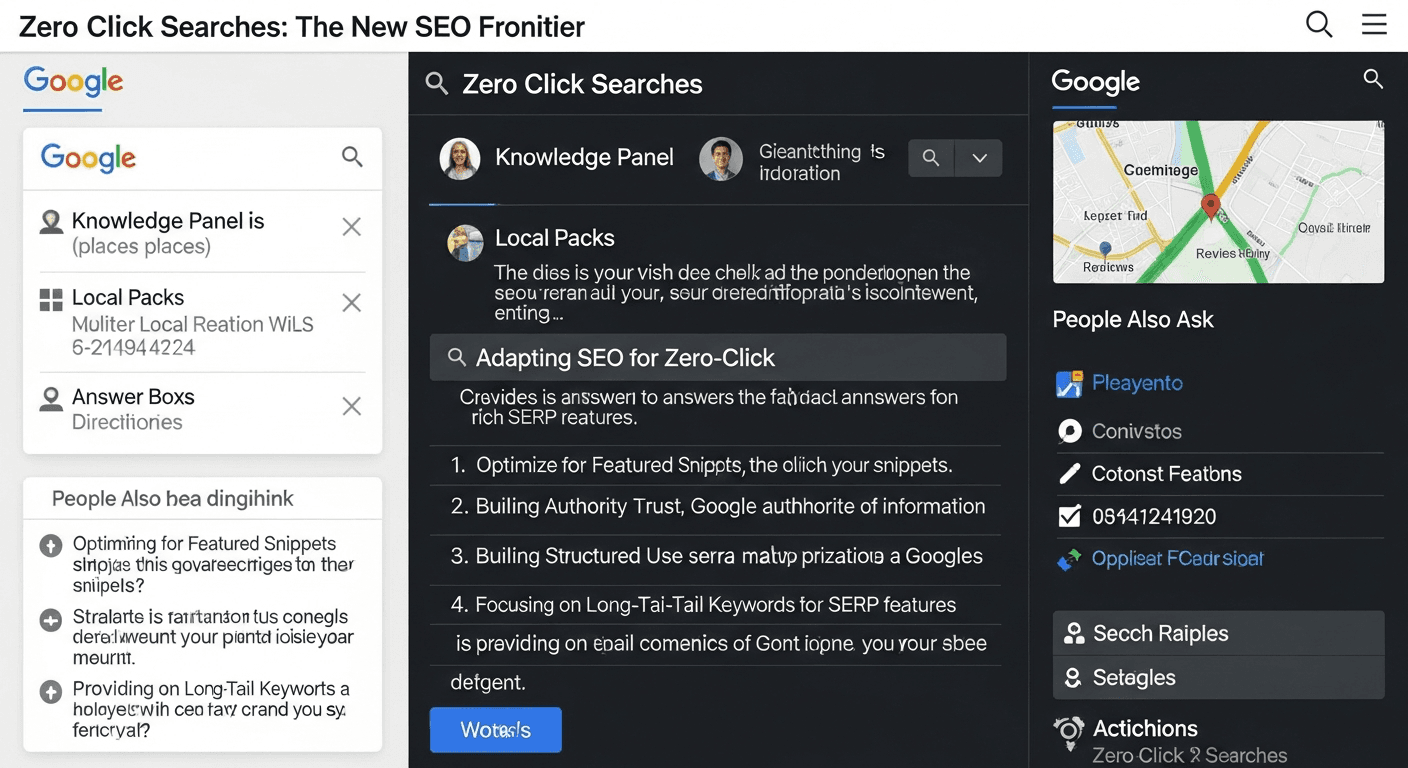
Featured snippets are often referred to as 'position zero' in search results, as they appear above the first organic search result. To optimize content for featured snippets, it's essential to structure your content in a way that directly answers common questions. This can be achieved by using clear headings, concise paragraphs, and bullet points to summarize information.
- Use header tags (H1, H2, H3, etc.) to clearly define sections of your content.
- Include lists, tables, and bullet points to organize information succinctly.
- Answer questions directly in the first 100-150 words to increase chances of being selected for a snippet.
Rich results enhance the standard search results with additional visual components like images, star ratings, and more. To increase the likelihood of your content appearing as a rich result, it's important to implement structured data markup on your website. This helps search engines understand the context of your content and display it more prominently in search results.
For example, if you run a recipe blog, using schema markup for recipes can enable Google to display cooking times, calorie counts, and other useful information directly in the search results. This not only helps capture zero-click search traffic but also enhances the user experience by providing immediate value.
Optimizing for Local SEO to Capture Nearby Searches
Local SEO is crucial for businesses that want to attract customers in their vicinity. Zero-click searches often have a local component, especially when users search for services or businesses near them. To capture this traffic, it's essential to optimize your Google My Business (GMB) profile, ensuring that all information is accurate and up-to-date.
Keep your Google My Business profile updated with current information, including your address, phone number, business hours, and customer reviews to enhance local search visibility.
Additionally, local SEO strategies should include optimizing for mobile users, as many local searches are conducted on smartphones. Ensure your website is mobile-friendly and loads quickly to avoid losing potential leads. Consider using location-specific keywords in your content and meta tags to further boost your local search performance.
Participating in community events and encouraging satisfied customers to leave positive reviews on platforms like Yelp and TripAdvisor can also enhance your local search presence. These reviews not only influence potential customers but also contribute to higher rankings in local search results.
Leveraging Structured Data to Enhance Search Visibility
Structured data is a standardized format for providing information about a page and classifying the page content. Implementing structured data on your site helps search engines understand the content better, which can enhance your visibility in search results by enabling rich snippets and other enhanced search features.
- Implement schema markup for different types of content, such as articles, products, and events.
- Use the JSON-LD format for structured data to ensure compatibility with search engines.
- Regularly update your structured data to reflect any changes in your offerings, such as new products or services.
By using structured data, you can provide search engines with detailed information about your site's content, which can lead to increased chances of appearing in rich results. For example, an e-commerce site can use product schema to display product prices, availability, and reviews directly in search results, making it easier for users to make purchasing decisions.
Structured data also helps with voice search optimization, as voice assistants rely heavily on structured data to provide accurate and concise answers to user queries. By implementing structured data, you can improve your chances of being featured in voice search results, further expanding your reach.
Measuring Success: Analyzing Metrics Beyond Clicks
In the context of zero-click searches, traditional metrics such as click-through rates (CTR) may not fully capture your website's performance. Instead, it's important to focus on metrics that reflect brand visibility and user engagement. This includes tracking search impressions, SERP positioning, and the number of featured snippets your site captures.
Search impressions, for instance, can provide valuable insights into how often your site appears in search results. By analyzing this data, you can identify opportunities to optimize your content for better visibility. Additionally, understanding your SERP positioning can help you evaluate your competitive standing and make informed decisions about your SEO strategy.
The future of SEO lies in understanding user intent and adapting to new search behaviors.
Engagement metrics, such as time on page and bounce rate, can also provide valuable insights into the effectiveness of your content. By understanding how users interact with your site, you can refine your content strategy to better meet their needs and capture their attention.